Tuesday, July 23, 2013

"How do you find out about interesting new ideas?" (1) Subscribe to YouTube channels such as ShalowShow and (2) Listen to the interviews with authors and (3) Read Susan Greenfield's novel 2121: A Tale from the Next Century

Some of my students ask, "Where do you hear about these interesting new ideas?" and "How did you hear about the novel 2121?  What did you search for?"

I didn't search.  I clicked here

Baroness Susan Greenfield at Oxford University


Susan Greenfield has other videos....


When I want to find out a new trend, I click on links sent to me by Youtube (I have subscribed to over 50 channels) and I try to remember to look for the latest YouTube upload from Richard Peritz.  Richard manages several YouTube channels, posting interviews with professors and other experts.   The interview that inspired a poster was with Susan Greenfield, who said, "It's something that I've wanted to do and I've done it.  I always fancied doing it and now I have. "  She described the book as a dystopia.  "It's an extension of issues of today, including mindchange [a concept similar to climate change, but taking place in our brains].   The novel is a look at trends and projections.  What will happen in 2121?  What kind of society will we have?"


Richard Peritz, manager of YouTube channels


Richard hands a book to Susan Greenfield

a comment left by a teacher in Florida
A portion of the Christiakis video


It's something that I've wanted to do and I've done it.  I always fancied doing it and now I have.
Susan Greenfield (Minute 16:50)

Richard Peritz is particularly skilled at getting people comfortable on camera and giving them space to exhibit their passion.  I listened to Susan Greenfield speak enthusiastically about her novel and I want my students to hear her say that sentences that are in blue (above).  I want my students to say the same at some point in their lives.


2121: A Tale from the Next Century


http://www.amazon.co.uk/books/dp/1908800577


Here are some extracts (students, start the story...)


You can read more here
Many readers will not take the trouble to click to get the sample chapter... that's why the portions are shown here.

Here is a review of the book
(The Guardian)


RECOMMENDATIONS FOR STUDENTS
(1) Subscribe to Richard Peritz's YouTube Channels.
Click Here
youtube.com/user/SHALOMshowTV
youtube.com/user/FloridasfinestTV
(2)  Search about something that you find in one of his videos.

Click here

You'll learn something interesting today.

http://www.youtube.com/watch?v=ka8mAYwE55g


By the way, how about a click?


Here's a publisher who knows how to use ebooks: (1) Let the public examine the entire book. (2) a poster came from page 133.

Here's the link.
http://www.stenhouse.com/shop/pc/viewprd.asp?idProduct=9718&r=sb10t132


Go ahead.  Look at the book.  The entire book.  It's possible to take screenshots, but who would spend so much time to avoid buying a book?


On the next page, I read the lines that inspired the poster: "Reading is breathing in.  Writing is breathing out.  Let's breathe."


Nice balance between "open access" and "if you want it in your hands, pay for it."  

The search for Virtual Mentors: Here's an open letter... I invite you to contact me and invite my students to send you questions by email.

I need mentors.   Mentors bring something "real" into a class.   It's fabulous when an adult visits my classroom.  I like to have a visitor each day.

POSITIVES
- Questions from my students
- Rapt attention:  "This is much better than any of your lectures, Mr. Steve."

NEGATIVES
- Time from your work day to drive to and from my school.
- The hassle of getting "checked out" by the school administrator.

So...  What if you become a VIRTUAL MENTOR?
My students can learn about your work and you can reply to their questions  from the comfort of your office or home.


Here's a letter that I want to write to you:
======== 

Hello:
I'm a math teacher.   I noticed 
(  ) you 
(  ) your car
(  ) your clothes
and I thought, "I bet that person would make a great mentor for my students."

(a) I'd like to show your website / photo / _______? to my class.

(b) I'd like to them to send you questions about your profession:
- how did you get interested in your work?
- how much reading do you do each week?
- what do you read?  magazines, trade publications, newspapers, books, articles?
- where do you get your news from?   (give specific sites and twitter accounts)
- where did you study to become an expert?
- what do you remember form school that helps you in your job at least once a month?
- what was not useful from school?   
- what should we teachers teach (that your teachers forgot to teach you)?

If some of the students want to learn about "what it's like to be (your profession) _________," would you mind if they wrote to you?    What is your email address?


=============

Here's an example of a letter that I sent to an artist in Australia... 


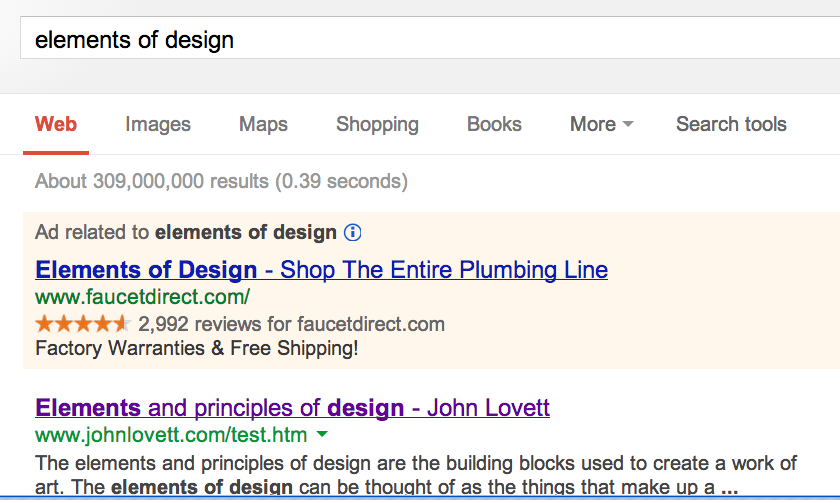
I'm a math teacher.   I was looking for a description of the principles of design and the search "elements of design" brought me to your page http://www.johnlovett.com/test.htm.

Nice page!

(a) I'd like to show your page to my class.

(b) I'd like to show them pieces of your page (screen shots from your webpage) printed on paper.

(c) Then I'd like to make a pdf of the page and give it to them on a USB (Many of my students have access to a computer but they don't have internet service in their homes -- and we lack an internet connection in many of our classrooms).


If some of the students want to learn about "what it's like to be an artist" who has made art a real job, would you mind if they wrote to you?   

Do you have a description about what it took for you to create your "splashing paint" book and disk?   
What inspired you to take time to develop a course?
How much time did it take you to learn how to create uyour website?  (or did you design the site and then someone else put it up and manages it?)
I'm teaching students the skills for the global economy (search "seven survival skills") and it will be helpful to hear what you learned on your own to move ahead in your life.   Some students think that success comes out of textbooks and other students think that they won't have to read much after they leave high school.  "That's the last book I'll ever have to read!"


I enclose my Virtual Mentor book and invite you to become a mentor or at least reply to some of the email messages that you receive.


======= 


So, send me your email address and a link to your website so my students can learn about your job and some of them might write to you.  TheEbookman@gmail.com


How can a video inspire a lesson in design? Take screenshots and ask students to analyze each step in the video. "Intention" by Apple Computer

https://www.youtube.com/watch?v=VpZmIiIXuZ0


Instead of just watching and then moving on, let's use one word:


Yes, let's focus on each phrase in this video.

Look for the most interesting frames in this video.


(a)  What happened here to show "surprise"?


(b) What logo designs can you create for words?


(c)  Why not use "make" or "build" in this sentence? What does the word "craft" bring to this sentence?  


(d) Why not use the phrase "improves each life"?


Do we take enough time before we say, "Here it is"?
I encourage my students to say, "I'm not ready to sign my work.
I'd like to work on this for another thirty minutes, please."

Why does the company use this phrase?


I found this video on this Twitter account.
You can say "Thanks"
by clicking on https://twitter.com/ArtForceInc

Let's start from the top of this blog post and ask
(1) Point to five frames from this video and identify something in each frame.
(2) What do you like about this video?
(3)  What would you change to improve the video?


Notes for teachers:
The first step in the procedure comes from Richard E. Clark, who points out that people tend to write more if you ask them to point at a photo and if you ask them to point to a specific number of items, such as "find five things in this photo."   CLICK here to learn more  

A friend, Jean Greer, brought the Apple video to my attention.  Thank you, Jean.   Dan Pink urges teachers to bring design into our classroom and Jean has helpedme by introducing me to the "Intention" video by Apple.  

Here is the new procedure: