Showing posts with label virtual mentor. Show all posts

Wednesday, April 23, 2014

Teachers: Make time to collect the reflections of a near-peer for your students. Here's a procedure for gaining a Virtual Mentor for your students


I have written about the importance of virual mentors -- adults who can have impact on students without visiting the class.  More than two dozen students have read words by John, who cooperated with submitting materials for the Virtual Mentor book... and John never visited that school. 


  1. How to Become a Virtual Mentor: Helping school ...

    www.amazon.com/How...Virtual-Mentor.../dp/1484816285‎
    Amazon.com
     Rating: 5 - ‎1 review - ‎$3.80
    How to Become a Virtual Mentor: Helping school personalize the learning [Steve McCrea] on Amazon.com. *FREE* shipping on qualifying offers. We know that ...
    You've visited this page 2 times. Last visit: 12/5/13

  2. ======================  

  3. Here's the procedure:  Look for a university student who can explain a decision, such as "Why I decided to study vet medicine and become an animal doctor."
  4. This young fellow has turned his back, at least for now, on university. He's just not ready.

    I heard that a fellow (19 years young) wanted to leave university...

    On Apr 22, 2014, at 9:00 PM, David C. Lloyd wrote:
    Good to hear from you Steve, below should be all that you need and if there's anything else just let me know.

    Audio Script:
    Hi, my name is David Lloyd and at the end of this year I will be leaving university to serve in the United States Coast Guard

    What were you doing when it suddenly hit you that you could do something else besides university at this moment?
    Since the start of college I had changed my major many times, according to what I couldn't do, what others thought I could do, what might help pay for school, and what I thought I might want to do

    What helped you make the decision?
    The thing that drove me to this ultimate decision was two fold, the first and most pressing was that economically I felt as if college was not a good path to be taking as secondly, I wasn't entirely sure of what I wanted to do and was just wasting precious time and resources maturing in a setting which may not have been right for me.

    What did you read or see on TV that gave you the balls to be true to yourself?
    What got the ball rolling was when payment for second quarter came rolling by and I just thought to myself, "my lord, I can't keep doing this"

    How scary is it to be on a path that is not traditional?
    Although it may feel scary at first, Im the type of person that enjoys having a plan laid out for me and now that I know what Im doing and where im going, for a few years at least, it puts me at ease.

    Cheers,
    David Lloyd
    E-1 DEP USCG


    That's what teachers of the future do...  we get "near peers" to give a mini-lecture.

    Here's what I wrote to David:

    I love what you’ve written.

    I took a gap year between high school and college and then, even at 19, I wasn’t sure.  I did the same as you, changing focus, so at 20, after one year of college, I went to learn French in Provence.  Oh, yes…  many delays after that … I was 29 before I got my bachelor’s degree.  

    Thank you.

    Would it be possible to give your email address to my students?


    I will tell them “No more than one email per month, only one question per email."
    visualandactive@gmail.com

    It is so cool to see USCG...


    I encourage you, reader, to send me a letter addressed to David and I'll forward it to him.

  5. PROCEDURE
  6. a.  ask questions
  7. b.  post the response on a blog (so that students can find the information)
  8. c.  collect the questions and mail them as a group to the near peer mentor (so he can sit and answer the group of questions in one sitting).
  9. I'll chronicle here the types of questions that they ask David.

Tuesday, July 23, 2013

The search for Virtual Mentors: Here's an open letter... I invite you to contact me and invite my students to send you questions by email.

I need mentors.   Mentors bring something "real" into a class.   It's fabulous when an adult visits my classroom.  I like to have a visitor each day.

POSITIVES
- Questions from my students
- Rapt attention:  "This is much better than any of your lectures, Mr. Steve."

NEGATIVES
- Time from your work day to drive to and from my school.
- The hassle of getting "checked out" by the school administrator.

So...  What if you become a VIRTUAL MENTOR?
My students can learn about your work and you can reply to their questions  from the comfort of your office or home.


Here's a letter that I want to write to you:
======== 

Hello:
I'm a math teacher.   I noticed 
(  ) you 
(  ) your car
(  ) your clothes
and I thought, "I bet that person would make a great mentor for my students."

(a) I'd like to show your website / photo / _______? to my class.

(b) I'd like to them to send you questions about your profession:
- how did you get interested in your work?
- how much reading do you do each week?
- what do you read?  magazines, trade publications, newspapers, books, articles?
- where do you get your news from?   (give specific sites and twitter accounts)
- where did you study to become an expert?
- what do you remember form school that helps you in your job at least once a month?
- what was not useful from school?   
- what should we teachers teach (that your teachers forgot to teach you)?

If some of the students want to learn about "what it's like to be (your profession) _________," would you mind if they wrote to you?    What is your email address?


=============

Here's an example of a letter that I sent to an artist in Australia... 


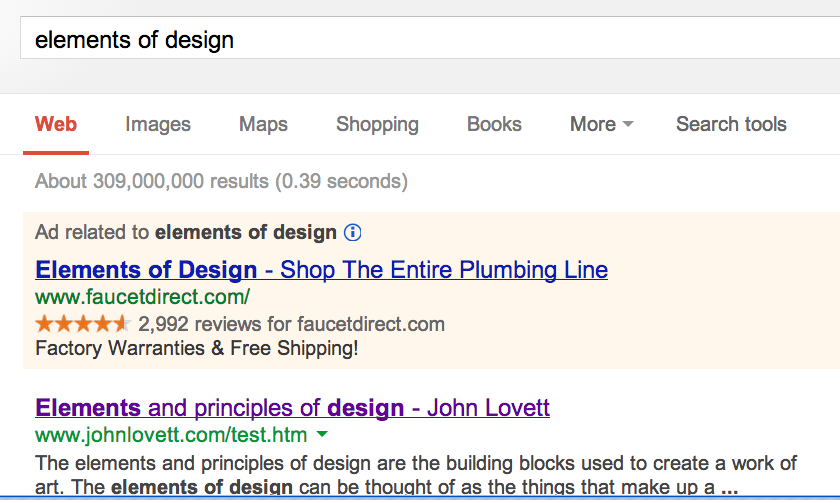
I'm a math teacher.   I was looking for a description of the principles of design and the search "elements of design" brought me to your page http://www.johnlovett.com/test.htm.

Nice page!

(a) I'd like to show your page to my class.

(b) I'd like to show them pieces of your page (screen shots from your webpage) printed on paper.

(c) Then I'd like to make a pdf of the page and give it to them on a USB (Many of my students have access to a computer but they don't have internet service in their homes -- and we lack an internet connection in many of our classrooms).


If some of the students want to learn about "what it's like to be an artist" who has made art a real job, would you mind if they wrote to you?   

Do you have a description about what it took for you to create your "splashing paint" book and disk?   
What inspired you to take time to develop a course?
How much time did it take you to learn how to create uyour website?  (or did you design the site and then someone else put it up and manages it?)
I'm teaching students the skills for the global economy (search "seven survival skills") and it will be helpful to hear what you learned on your own to move ahead in your life.   Some students think that success comes out of textbooks and other students think that they won't have to read much after they leave high school.  "That's the last book I'll ever have to read!"


I enclose my Virtual Mentor book and invite you to become a mentor or at least reply to some of the email messages that you receive.


======= 


So, send me your email address and a link to your website so my students can learn about your job and some of them might write to you.  TheEbookman@gmail.com


How can a video inspire a lesson in design? Take screenshots and ask students to analyze each step in the video. "Intention" by Apple Computer

https://www.youtube.com/watch?v=VpZmIiIXuZ0


Instead of just watching and then moving on, let's use one word:


Yes, let's focus on each phrase in this video.

Look for the most interesting frames in this video.


(a)  What happened here to show "surprise"?


(b) What logo designs can you create for words?


(c)  Why not use "make" or "build" in this sentence? What does the word "craft" bring to this sentence?  


(d) Why not use the phrase "improves each life"?


Do we take enough time before we say, "Here it is"?
I encourage my students to say, "I'm not ready to sign my work.
I'd like to work on this for another thirty minutes, please."

Why does the company use this phrase?


I found this video on this Twitter account.
You can say "Thanks"
by clicking on https://twitter.com/ArtForceInc

Let's start from the top of this blog post and ask
(1) Point to five frames from this video and identify something in each frame.
(2) What do you like about this video?
(3)  What would you change to improve the video?


Notes for teachers:
The first step in the procedure comes from Richard E. Clark, who points out that people tend to write more if you ask them to point at a photo and if you ask them to point to a specific number of items, such as "find five things in this photo."   CLICK here to learn more  

A friend, Jean Greer, brought the Apple video to my attention.  Thank you, Jean.   Dan Pink urges teachers to bring design into our classroom and Jean has helpedme by introducing me to the "Intention" video by Apple.  

Here is the new procedure:


Tuesday, April 30, 2013

MentorsOnVideo.org, virtual mentors, JacketFlap.com and students in Los Angeles -- something is coming together...

I read somewhere that teachers ought to spend more time looking for mentors than lecturing in class.  More time spent scouring the city for role models would bring in more teachers.

(I think this idea is somewhere in The Big Picture) metcenter.org


From somewhere in JacketFlap.com
So I started an effort called MentorsOnVideo.org.  People who gave me short pieces of advice on video could turn into mentors that I could "call on" via YouTube to offer information to my students.

So when I heard about JacketFlap.com as a way to spread information about my books, I started posting some information and I got an email message from an artist who illustrates books for young adults.  Here's his message:


Hi, Eric Hammond has left you a comment on your profile at JacketFlap.com. Here's Eric's comment: 

Here's a message from Eric:
Greetings, fellow Floridian. Welcome to JacketFlap, Steve.

To leave a comment on Eric's profile, please click on the link below:

http://www.jacketflap.com/profile.asp?member=Eric


Add caption
Hmmm...  I had recently met some students at Highland Park High School (see their efforts below) and I was in the midst of compiling information for a book about virtual mentoring.   So why not introduce some of those students to the artwork of EricHammondSite.com.  

Who knows who might get inspired?   You can find more info at the JacketFlap.com page for Eric.

oh, and looking for inspiration?  How about PeterBregman.com?  The columnist appears in PsychologyToday.com.  I've been looking at his columns for guidance. 

See the full column

Steve Jobs is often noted for thinking outside the box, but it turns out that innovators have to say "no" more often than I expected.  I thought that being flexible and open-minded might not go with saying "no."   Here's what Jobs observed:

People think focus means saying yes to the thing you've got to focus on. But that's not what it means at all. It means saying no to the hundred other good ideas that there are. You have to pick carefully. I'm actually as proud of the things we haven't done as the things I have done. Innovation is saying "no" to 1,000 things.   source for another side of the 1000 "no"s