Thursday, March 28, 2013

Richard E. Clark discusses two key questions for education: How can we best capture expertise and knowledge from experts? How do we teach the expertise effectively to other people?

Two key questions for education today
How can we best capture expertise and knowledge from experts?
How do we teach it effectively to other people?   How do we transfer that expertise and knowledge?
These are two questions that face education today.


The following interview took place in Dr. Clark's office in Redondo Beach, Calif. on 27 February 2013.  

Partial transcript of an interview with Richard E. Clark.
See the website for papers at the CogTech.usc.edu website

http://www.youtube.com/watch?v=RhsBqmakNMc&feature=youtu.be


Summary of key issues

We talked about expertise that comes from a lot of experience.  -- Richard Clark
Highly accurate pattern matching and predictions about what happens to those students as they go through a program.  

is it possible to capture how he does it?         Capture Expertise and knowledge
how do we teach it effectively to other people?   Transfer that expertise and knowledge
The two questions that face education today.


=============
PARTIAL TRANSCRIPT
Starting at Minute mark 0:22

What you are describing to me is expertise that happens as a consequence of a lot of experience.  -- Richard Clark

Let's take you [Will Sutherland] as an example.

Highly accurate pattern matching of what you see in students and your prediction about what's going to happen to those students as they go through a program.  

1) I'm curious to know how we can capture from you your expertise and knowledge.
2) How do we teach it to other people effectively?   Transfer that expertise and knowledge
The two questions that face education today.


That's what education should be about.

Capturing expertise and knowledge
and Transmitting it effectively so that it can be applied.

We have ways to capture that expertise that people are not paying attention to because so much of it (the expertise) is implicit.

It's unconscious.

I don't think you know exactly how you do it, because when you see those students and watch them behave,  all of a sudden it just occurs to you "This fellow is going to do fine."

Then it will occur to you with someone else, "Whoa, this is a problem."

Are you deeply aware of what you notice?  Generally our evidence is that you are aware of about 30 percent __________.

70 percent, most of which is at the decision level, at the deep mental analysis level, is not available to you because you have done this so much that it is automatic, like talking or driving a car.  


So I want to find out how to capture that kind of information from experts and build it into an education, even if it is information about how to solve a math problem.  Math experts know how to solve problems and they have very quick strategies for it, and obviously some of those strategies require a lot of prior knowledge.  

That's why prior knowledge turns out to be very critical.  There are certain areas of math that you can't master until you've grasped the math of other areas.
Get this article

Once you've done that, there are problem solving strategies that are available to [virtually] all areas of mathematics but they are quite specific to the area and the type of problem.  

There are very few general problem solving strategies that can be applied effectively.  That's what swims upstream against the belief systems of so many teachers.

(end partial transcript at 3:01)

COMMENT:  Dick Clark is perhaps referring to the belief that teachers should adjust their presentations to fit the "learning styles" of individual students.  In fact, the adjustment should be to the prior knowledge of the students.  Ideally, the math teacher would put students into groups that are organized by prior knowledge so that presentations could be made based on the prior knowledge of those students.

(more of this video will be transcribed here over time.)

To read more about Richard Clark's analysis of "Popular but Questionable Principles"
Clark, R. E. & Feldon, D. F. (2005). Five common but questionable principles of multimedia learning. In R. E. Mayer (Ed.), Cambridge handbook of multimedia learning.Cambridge: Cambridge University Press.

see other publications at COG Tech http://www.cogtech.usc.edu/recent_publications.php
=======

Get these posters
See pages 31, 33, 35, 37 and 39

also on the phone call (part of the interview):
Will Sutherland,  ws@qbeglobal.net        www.QBEAcademy.net   life skills at sea (entrepreneuring)
Noel Thompson, noeldthompson@gmail.com
John Vornle,  johnvornle@gmail.com     www.SpacePathAhead.com
Mario Llorente, mariopatriot@yahoo.com
S. McCrea, transcriber   visualandactive@gmail.com

Sunday, March 24, 2013

More Subscriptions for this YouTube Channel (please). Here's why: Students at Stonefields School, Auckland, describe the Pit and "What are the Qualities of a Learner?" (transcript of a school-made video)


Thank you, Lutz
I selected this video for transcription because one of former language students (Lutz, who exemplifies the qualities of a curious learner) asked me to explain what the students were saying (the volume is low on the video).

I would not have watched or listened to this video -- I had posted the channel and directed my colleagues to look at the channel.  Lutz asked, "What is that girl without a tooth saying?"

Only three subscribers?!!  (March 2013)  If you have a YouTube account, please subscribe.   And how about a thousand likes...

Hmmmm.   Lutz's wife is a teacher.  Lutz has good radar for effective school programs.  I should listen to this request...


Here's the transcript.


Building Learning Capacity
a video from Stonefields School


0:00
A definition for learning now at Stonefields would be
making progress
learning new things
using the learner qualities
learning as well as you can


0:28 shows the 7 learning qualities
determined
self aware 
reflect
connect
think
wonder
question


not just learning, but learning to learn


======= 
0:38
second student
The learner qualities are qualities that help you learn at Stonefields school
there are seven learner qualities

Q:  What makes a learner a good learner, Ashton?
by using the learner qualities, 
determined
question
reflect
self aware 


1:00
reflect
determined
think
question
wonder
self aware

1:07  a new student
You just do "like that"  (holds up hand) (REFLECT)
and you can also use THINK

I try to cut (catch?) and wonder
like I ask questions to other people if they can help me with my learning


1:30
Q:  What do you reflect ?
You can reflect what your next step is.
You can reflect any time of the day.  and you can reflect on your learning to see if you have done good or if you have done bad in your learning.


Q:  So what do you ask yourself when you are reflecting?
What you enjoyed, what you learned, what you can improve on.


Q  What can you improve on?
PROBABLY connect.

Q:  Tell me what you do to connect?
I connect the easy stuff that I know to the stuff that I want to work out and then I  try to get the answers.


Q:  Which learner quality would you say is the trickiest one?
Self Aware.

Q:  tell me why you find that tricky.
Because sometimes I don't know when to be self aware.    But I should be self aware all the time.

at 2:18 a chart is shown.
And the other tricky one is questions.  because when we are in groups, we ask other groups  and they might not get the answer 

and when I ask three other people and the teachers are not there, then I have to try to work it out myself.

====

In the chart, there are four examples for Self Aware

Definition:  Aware of yourself as a learn, you actions, thoughts, and next steps.

First stage:  I am not sure of the things that might help me to become a better learner

Second Stage:  I am beginning to billed awareness of what I need to do to become a better learner, I can identify some next steps to improve

third stage:  I am self aware in my actions and reflection to further improve and develop my strengths.  I independently work toward achieving my next steps.

==============


The chart also shows tips for Connects and Is Determined.

Connects = Linking knowledge toothier to create new understandings

Third Stage:  I make many links and connections between pieces of knowledge to crate new ideas or deeper understandings.

------

Determined =  the ability to stick at a challenging task when you feel like giving up.  the desire and determination to self improve and succeed. 

I can self-talk to show determination with tasks that are a little tricky and motivate myself to keep going

THIRD STAGE:  I have a number of strategies that help me to be determined when task are challenging.


=========
We use learner qualities at 
Stonefields school by 
well… not giving up.  When you are stuck, you [can] be determined and try to get out of the Pit.

at 2:57 the diagram of the PIT is shown.

It can be good to be in the Pit.  sometimes because you will learn from what the mistake that you did.


3:08
Q:  What do you do when you get stuck as a learner?
I use my prior knowledge, i use the learner qualities  which mostly I would rather be determined.

3:28  
Q:  as a learner do you get stuck?   
yes I get stuck

Q:  How often?
Almost every second of the day.

Q:  Wow, so is it up to you or the teacher to make you stuck?
It's up to me.

Q:    What is the best thing about Stonefields school?
Because they get me stuck in the pit.  and challenge me.

Finding techniques to be in the pit.
and get stuck and find and use techniques to (um)  try and figure it out.

4:05
Q:  how often do you get stuck?
A lot

Q:  What helps you to get out of those stuck situations?
To ask a buddy or to use some of the secrets that the teachers give us

4:25
Q:  Has your notion of learning changed?
yes immensely

Q:  can you tell me about that?
uh   When I first came here, I thought that learning was getting good grades,
doing what the teacher says, doing your homework. things like that.

but now it's more, it's not just the surface learning,  it's deeper learning.
Q:  can you explain what that deeper learning is?
it is having a system of how we learn, knowing how we learn.  For example, we have been learning about the brain.   We use learner qualities, learning process, our vision principles.  
We learnt much more about learning, we didn't just learn.  We learnt about learning.

music

Building Learning Capacity  
channel  StonefieldsSch   7 videos  


======
commentary
Stonefields has appeared to take some of the best of the IB program ibo.org and simplified it for kids to be able to rehearse and call on when they are "in the Pit."

A frequent comment was "How do we make learning visible?"

I'll return to this blog with an analysis of some of the walls in classrooms.

WORTH A LOOK:  Chris Bradbeer's blog  openlearningspaces.blogspot.co.nz


Let's get more subscriptions on this school's YouTube channel.


Monday, March 18, 2013

Worth a click. Stonefield's open learning spaces are discussed in a blog by Chris Bradbeer


that is a fan's post, Sarah Holland

notice the ways to hang books on the wall

Here is the school's official site.  Only one subscriber
http://www.youtube.com/watch?v=tMB7b1rmmrM  I'm the second subscriber


http://www.youtube.com/watch?v=tMB7b1rmmrM    stonefields in New Zealand...

"What spins your wheel?" was spoken on this sofa.
I'm the second subscriber on Youtube.   Why not click? ... only 875 clicks... let's give them a boost...


you can also see Chris Bradbeer's  blog   

I'm the second subscriber on Youtube.   Why not click  the future?
look for the Youtube interview ... on visualandactive

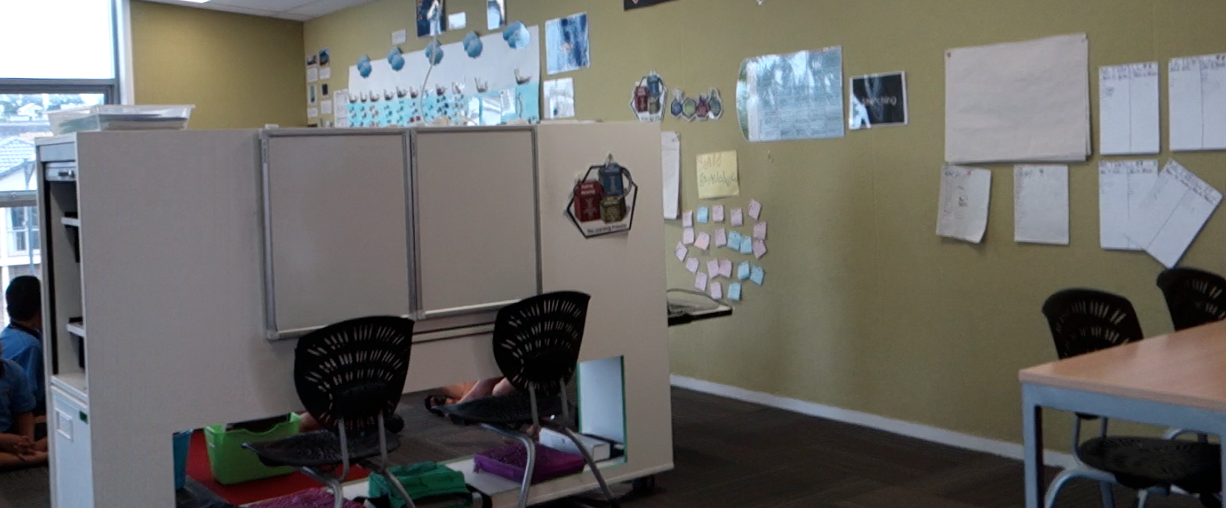
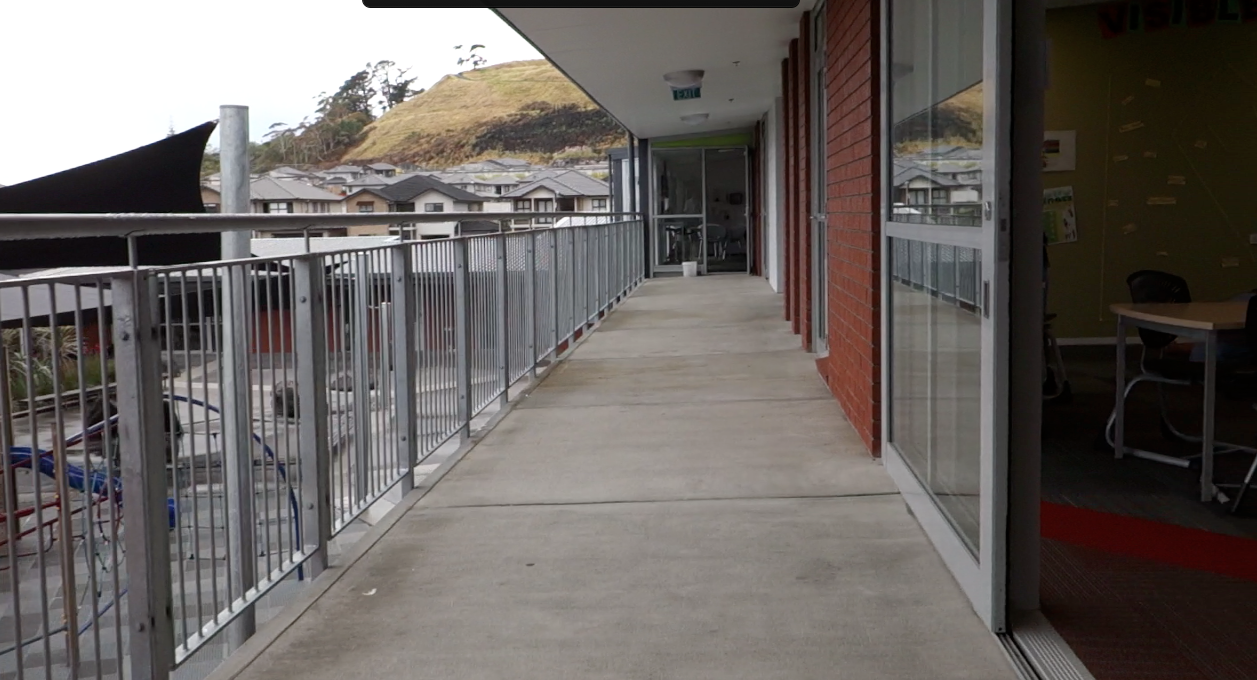
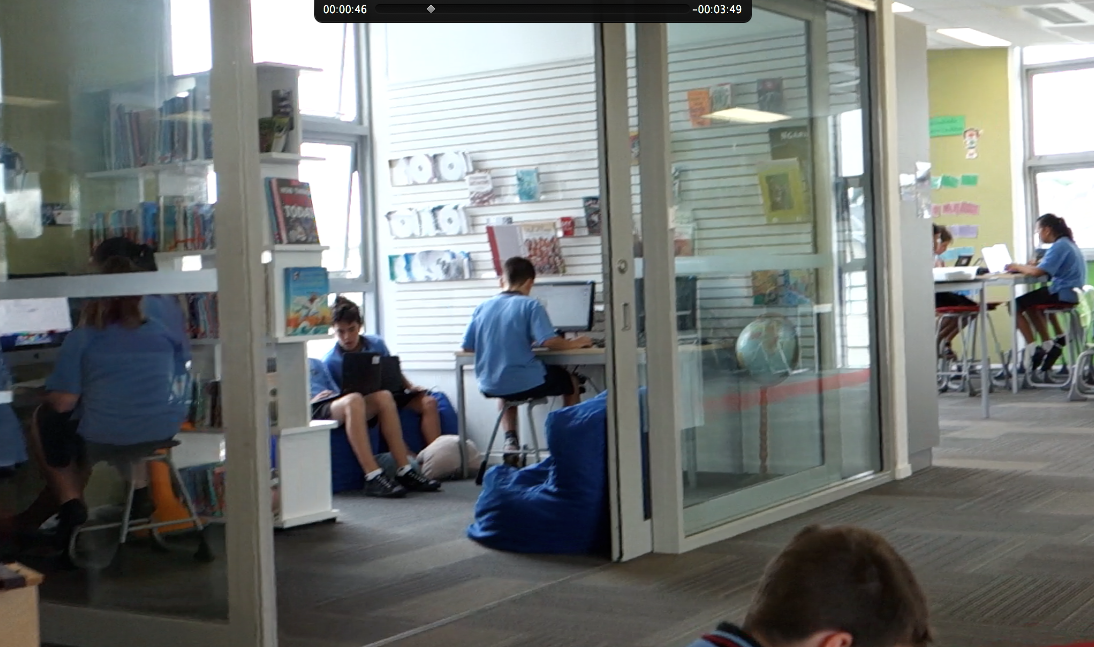
Here are some images from a visit to Stonefields plus a look at the Open Learning Spaces blog.
Google Chrome device


this student likes the keyboard


open learning spaces.... visit the blog  http://openlearningspaces.blogspot.co.nz/


active walls that display current drafts of work, not finished products

neighborhoods

notice the large sliding glass wall.  Chris wonders when they'll invent a device to project on glass


http://openlearningspaces.blogspot.co.nz/

notice the bins on the left

the "pit" was described in that glass enclosure.
See the next blog entry


Saturday, March 16, 2013

Free Posters -- please share them. Use posters to shift the mindset of students and others


I encourage you to download these posters.   The items are in Creative Commons.  Please use them with attribution to the people who are quoted.


Download the free ebook here

You can get the posters at TransformTeaching.org and GuideOnTheSide.com

To support the work of the posters, consider introducing the quotes that are described at "Conversations that Matter" (an interview with principal Barbara Cavanaugh in Albany Senior High School near Auckland, New Zealand).


"Look for small positive behaviors in society and amplify them" Joichi Ito's advice (rather than trying to change everything)


Joi Ito teaches at MIT (director) 
Media Arts and Science


Here are some rough extracts...

This fellow  Joi Ito says:
1.  the only thing of value that I learned in school, that I actually used later in life, was typing with ten fingers.  (4 minutes)
2.  Most of what I learned, I learned on my own.  I taught myself.   (see 4:20)


24 minutes
peer groups
learning through projects

minute 25
everyone should be a teacher, everyone should be a student

it's important to let elements of the community think "peer to peer"  
If you start with the school as the center of learning, then you end up with certain structures, no matter where you build the school.   (meaning:  Schools tend to have certain elements, receptionist, curriculum, textbooks, classrooms, authorities, decisionmakers.... "certain structures")

innovation takes place on the periphery.

27 minute
I do volunteer teaching in high schools in Japan 
where they are not allowed to have cellphones in class.

"What are your interests?  What are your passions?"
Answer from many teens in Japan:  "I don't have one."

You have to start really early.
people tend to copy what has worked elsewhere.

People need role models.  Look instead for local ways of thinking...
It's your job to create local ways of thinking.


minute 30    positive deviance  Professor Pascal at Harvard
look for small deviant behaviors in society, and amplify those, rather than try to change everything.

I don't think you can persuade someone to change everything at once. but maybe you can change a couple of schools

rather than copy from another culture...


31 minute
I would replace the mentality of being a teacher with the mentality of being a coach.

tease out from the students what they are thinking, what their issues are.

What are you interested in?  What are your passions?
listen more than preaching.  (31:58)


Monday, March 4, 2013

Free Poster: How to encourage students to engage more deeply in a writing exercise (recommendation by Richard E. Clark)

Here is a procedure recommended by Richard E. Clark:


"Point to and briefly describe each of ten different things you see in this picture."
The more that students are challenged to notice elements in pictures or paintings the more insightful they become about the overall interpretations of what they see.  
--  Richard E. Clark, USC


This poster is available at TransformTeaching.org


The aim of this series of posters is to encourage teachers to discuss these principles with colleagues and with their students.  

The principles in the the design of the posters is
a)  use as few words as possible to accomplish the task
b)  introduce an analogy to help viewers to remember the point.
c)  give the viewer a procedure to accomplish the goal of the poster.

(THIS WORDING IS DRAFT, awaiting eventual confirmation by Richard Clark.  Comments are invited from the public.)

"The Poster Principles" by Richard E. Clark, from an interview on 27 February 2013, posted on YouTube.com

Sunday, March 3, 2013

The Third Teacher and the Third Room: A visit to SCIL in Terrey Hills, Australia (near Sydney)

The school supports programs in other countries
Anne Knock's blog http://anneknock.com/ informed me about SCIL and then I learned of Stephen Harris' blog.   
ImagineLearning.tumblr.com

On the front desk of the reception

Slideshow of photos that the school has selected to greet visitors

If you have seen http://scil.com.au/, you will recognize this room


Without these links, you wouldn't be seeing these photos.

The Innovation Center is about 45 minutes north of Sydney.   
What are 5 dangerous objects that children should play with?

There's a workshop in Nightingale Middle School in Los Angeles
Anne gave me 45 minutes of her time and shared the following tips:


The Third Space is the coffee shop or library  (1.  Home, 2. Work or School).  LINK

The Third Teacher is the wall:  1. Parents, 2. Teachers at school.   Go ahead, download some signs...

www.TheThirdTeacher.org the environment


SCIL is planning a tour of USA schools in 2014.   See Harris' blog for summaries of past trips.

This is how you know you are near a school of the future... 


Links to try:  http://scil.com.au/

Turn here for innovation.


Saturday, March 2, 2013

Dan Pink's TO SELL IS HUMAN should be added to the list of "Books that Teachers Need to Show to Their Students"


This post is fueled by a crack in one of my core beliefs.  The crack was created by reading Dan Pink's book.

Core Belief:  Selling is for people who are tough skinned.  
I'm not tough-skinned.
I don't need to learn how to sell.

SUMMARY
Pink begins the book by defining "sales" in the traditional way, that 1 in 9 of us makes a living by pushing products and services.

It has always been clear to me that ABC (always be closing) is the ideal and that I could never sustain the effort to pursue a client so passionately and so persistently.   Now I see that I'm part of the 8/9 that is not the "obvious" sales person, but rather I'm in the "persuader class" -- so we teachers are all persuaders and we are always trying to find new ways to ask people to part with resources (time, attention and effort) to achieve something else.   

If you want to see details, then read on.  Otherwise, just buy Pink's book.   It's worth $20 to get a lesson plan for our students.

=====  

From JohnnyBunko.com
The idea of a global community connected on the web is clearly a "haves and have nots" situation.  The hotel wants to charge $28 U.S. for a 24-hour use and there's an outside contractor that offers in-hotel machines at $9.60 for an hour.

IMBALANCE between sellers and buyers...
Dan Pink's book  TO SELL IS HUMAN is becoming more and more relevant for my teaching aims.   I can see that my students need Pink's viewpoint to help them navigate the older attitude toward sales (which is largely described by "the used car salesman.")   "Caveat emptor" attitude reigns here in Australia.   Pink describes the new environment of "caveat venditor"  seller beware... because the buyer has access to just as much info as the seller.

I recommend Pink's description of the imbalance that "always be closing" generates and he offers three new ABCs:  A_______(attunement),    Buoyancy and Clarity.   

attune students to the buyer (listen, don't constantly close)
be upbeat and positive (buoyant) in the ocean of rejection
be clear about what is important and balance the positivity with data about how they are actually performing in the market

You can find a good summary of TO SELL IS HUMAN on the Internet and Pink offers the first chapter.   Perhaps in four or five years it will be generally recognized that this book is REQUIRED READING FOR EDUCATORS.  

I thought that Pink had gone corporate, wanting to turn us all into marketing agents for brand X, but I misinterpreted the author's intent.  He has been writing a series of connected books.

Free Agent Nation:  Pink described in 2001 the rise of the independent contractor.


The Adventures of Johnny Bunko:  The last career guide that you'll ever need (a manga comic book).  (2008)
Here's the publisher's description:  Meet Johnny Bunko. He's probably a lot like you. He did what everybody - parents, teachers, careers advisors - told him to do. But now, stuck in a dead-end job, he's begun to suspect that what he thought he knew is just plain wrong. One bizarre night, Johnny meets Diana, the unlikeliest career advisor he's ever seen. She reveals to Johnny the six essential lessons for thriving in the world of work. Packed with smart, counter-intuitive and potentially life-changing advice, it's the first and last career guide you'll ever need.

A Whole New Mind:  Pink described the capacity that we all (especially independent contractors) need to develop in ourselves to compete with Asia.   (2005)
He described the work (the niche) that automation and abundance offer us to grow into.

Drive:  "How to motivate ourselves and others" is what we independent contractors need to understand...  Dick Clark claims that Pink is overgeneralizing about "what motivates others" beyond money, but I like the idea that we can move people by appealing to Autonomy, Mastery and Purpose.  Published in 2009

To Sell is Human:  It is clear that we independent contractors can create business for our skills.  (2013) We need to prepare people to persuade others to part with time, attention and effort to do something else  (which is the heart of selling).  

In other words, these five books are part of a curriculum.  Dennis Yuzenas gets it.  His focus on "building skills" at Oxbridge Academy has resulted in dozens of students who are focused on the Tony Wagner list of skills.

I have a friend who told me, "I read the Atlantic Monthly and Harper's because smart people will tell me what is important."  That's how I look at Dan Pink's oeuvre.  He has set up a curriculum that we all can guide our students to reach for.

=========

I'm writing this message in the lobby of a hotel in Sydney.  Import duties cause books to cost $40 when the hard cover might be $25 in the USA.  Fewer people will have access to Pink's ideas and that's why I'm leaving my copy of the book over on this side of the Equator.  I recommend that people in the USA  make a friend in the Southern Hemisphere and send a copy of TSIH to a teacher there.

I also need to send a copy of TSIH to Enrique's school Highland Park High School to go with the growing shelf of "cool books from Florida" (my name for the collection of books that I left in the school to attract the students who might be curious).

This somewhat disjointed email documents how disruptive Dan Pink's writing is.  I have resisted reading his new book since Dec. 10. That's 70 days of resistance since I first read the free chapter in December.

It has always been clear to me that ABC (always be closing) is the ideal and that I could never sustain the effort to read so long and so persistently.   Now I see that I'm part of the 8/9 that is not the "obvious" sales person, but rather I'm in the "persuader class" -- "non-selling" selling -- so we teachers are all persuaders and we are always trying to find new ways to ask people to part with resources (time, attention and effort) to achieve something else.

Attention, Effort and Time is another triplet composed by Pink, to go with
Asia, Automation and Abundance
Autonomy, Mastery and Purpose

Buy the book:   LINK TO AMAZON.


A tangential recommendation about a book ... Teachers, please take note of this skill


This post comes from a disjointed email ...  fueled by lack of sleep, jet lag and a crack in one of my core beliefs.

Disruptive writing leads to incoherent thoughts


Core Belief:  Selling is for people who are tough skinned.  
I'm not tough-skinned.
I don't need to learn how to sell.


SUMMARY
This somewhat disjointed email documents how disruptive Dan Pink's writing can be.  I have resisted reading his new book... I finally got through it on a 14-hour flight.

Pink begins the book by defining "sales" in the traditional way, that 1 in 9 of us makes a living by pushing products and services.

It has always been clear to me that ABC (always be closing) is the ideal and that I could never sustain the effort to pursue a client so passionately and so persistently.   Now I see that I'm part of the 8/9 that is not the "obvious" sales person, but rather I'm in the "persuader class" -- so we teachers are all persuaders and we are always trying to find new ways to ask people to part with resources (time, attention and effort) to achieve something else.   

If you want to see details, then read on.  Otherwise, just buy Pink's book.   It's worth $20 to get a lesson plan for our students.


=====  
Observations about Internet in Sydney, Australia
It costs $2.40 for 15 minutes of Internet access in a hotel in Sydney.


There is free Internet for 30 minutes at a time at local restaurants (McDonald's, Starbucks, Hungry Jacks, a knock off of McD's) 

There is free email at a fancy restaurant called Vivaldi where the code is abcd2000 to get on their Internet.   I might head over there in a moment.


It is 4 am here, so that means it is around noon for you in Florida on the previous day.   16 hours difference.  The trick is to look at your clock and count backwards 8 hours (or count forward 4 hours and change pm to am).


It is highly unlikely that you will be on the internet at the same time that I will, so Skype is difficult to arrange.  This 16-hour difference is difficult to hold in the head than a simple 3 hours earlier in West Coast or 6 hours later in Europe (from the NY time zone).

Features of the "free 30-minute internet"
a)  not everything attached to email messages gets downloaded (you can see the header but no content of the email)
b)  when I try to upload to YouTube, the service just feigns ignorance.  I get logged out and then when I try to connect again, the service claims that I've used my 30-minutes and so I need to wait for 15 minutes before logging on again (presumably to allow other patrons to check their email).


The idea of a global community connected on the web is clearly a "haves and have nots" situation.  The hotel wants to charge $28 U.S. for a 24-hour use and there's an outside contractor that offers in-hotel machines at $9.60 for an hour.


IMBALANCE between sellers and buyers...
Dan Pink's book  TO SELL IS HUMAN is becoming more and more relevant for my teaching aims.   I can see that my students need Pink's viewpoint to help them navigate the older attitude toward sales (which is largely described by "the used car salesman.")   "Caveat emptor" attitude reigns here in Australia.   Pink describes the new environment of "caveat venditor"  seller beware... because the buyer has access to just as much info as the seller.

I recommend Pink's description of the imbalance that "always be closing" generates and he offers three new ABCs:  A_______(attunement),    Buoyancy and Clarity.   

attune students to the buyer (listen, don't constantly close)
be upbeat and positive (buoyant) in the ocean of rejection
be clear about what is important and balance the positivity with data about how they are actually performing in the market


You can find a good summary of the TO SELL IS HUMAN on the Internet and Pink offers the first chapter.   Perhaps in four or five years it will be generally recognized that this book is REQUIRED READING FOR EDUCATORS.  

I thought that Pink had gone corporate, wanting to turn us all into marketing agents for brand X, but I misinterpreted the author's intent.  He has been writing a series of connected books.

Free Agent Nation:  Pink described in 2001 the rise of the independent contractor

A Whole New Mind:  he described the capacity that we all (especially independent contractors) need to develop in ourselves to compete with Asia.   
He described the work (the niche) that automation and abundance offer us to grow into.

Drive:  "How to motivate ourselves and others" is what we independent contractors need to understand...  Dick Clark claims that Pink is overgeneralizing about "what motivates others" beyond money, but I like the idea that we can move people by appealing to Autonomy, Mastery and Purpose.

To Sell is Human:  It is clear that we independent contractors can create business for our skills.   We need to prepare people to persuade others to part with time, attention and effort to do something else  (which is the heart of selling).  

In other words, these four books are part of a curriculum.  Dennis Yuzenas gets it.  His focus on "building skills" at Oxbridge Academy has resulted in dozens of students who are focused on the Tony Wagner list of skills.

I have a friend who told me, "I read the Atlantic Monthly and Harper's Monthly because smart people will tell me what is important."  That's how I look at Dan Pink's oeuvre.  He has set up a curriculum that we all can choose to reach for.

=========

I'm writing this message in the lobby of a hotel in Sydney.  Import duties cause books to cost $40 when the hard cover might be $25 in the USA.  Fewer people will have access to Pink's ideas and that's why I'm leaving my copy of the book over on this side of the Equator.  I recommend that people in the USA  make a friend in the Southern Hemisphere and send a copy of TSIH to a teacher there.

I also need to send a copy of TSIH to Enrique's school Highland Park High School to go with the growing shelf of "cool books from Florida" (my name for the collection of books that I left in the school to attract the students who might be curious).

This somewhat disjointed email documents how disruptive Dan Pink's writing is.  I have resisted reading his new book since Dec. 10. That's 70 days of resistance since I first read the free chapter in December.

It has always been clear to me that ABC (always be closing) is the ideal and that I could never sustain the effort to read so long and so persistently.   Now I see that I'm part of the 8/9 that is not the "obvious" sales person, but rather I'm in the "persuader class" -- so we teachers are all persuaders and we are always trying to find new ways to ask people to part with resources (time, attention and effort) to achieve something else.  

Attention, Effort and Time is another triplet composed by Pink, to go with
Asia, Automation and Abundance
Autonomy, Mastery and Purpose